
My Mac's Fan won't turn off and is always running
Why does my Mac have its fans running at full speed? Discover all the causes, tips and tricks to fix it.
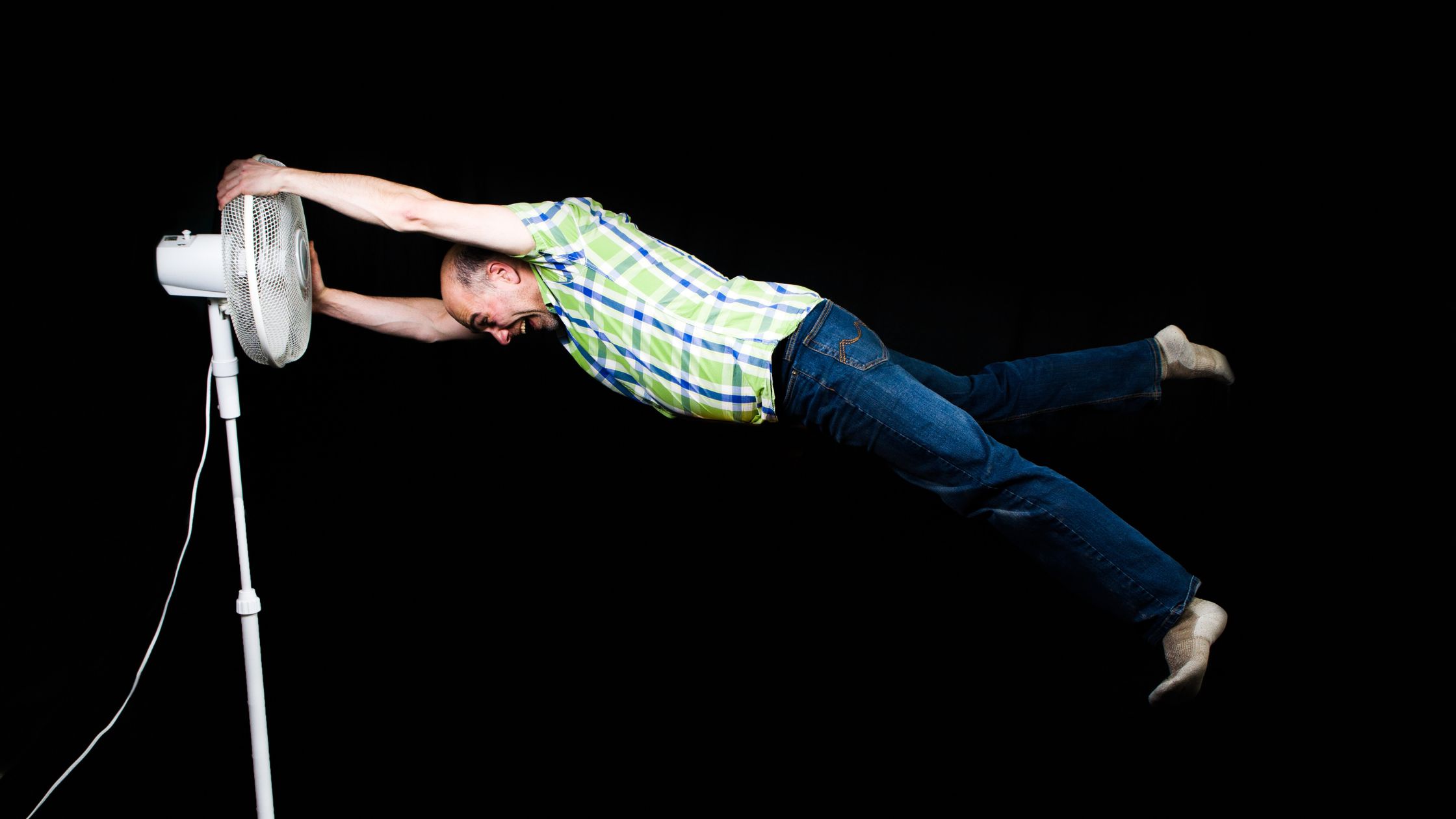
If your Mac's fan won't turn off or is always at full speed, it's not “normal”: it indicates that the system is trying to dissipate heat or that there is a blocked process. Here you have a quick diagnosis and clear solutions that work both on Intel Macs and Apple Silicon (M1–M4), ordered from most to least likely and without filler.
Signs that something is wrong
- The fan starts even with few apps open and doesn't slow down.
- You hear continuous noise after connecting an external monitor or when closing the lid (failed sleep).
- The case is warm or hot even though the use is light.
- The battery drains faster and the device seems to “think” slowly.
These clues point to abnormal CPU/GPU consumption, poor ventilation, dust or a power setting that prevents sleep.
Most common causes (and how to confirm them)
1) Apps or processes that saturate the CPU/GPU
A browser with too many tabs, video editors, games, processes like powerd or indexing (mds/Spotlight) can keep the fan high. Confirm it from Activity Monitor > CPU by sorting by “% CPU”.
2) Ambient temperature and support surface
A soft surface (sofa, bed) covers the vents. A warm room reduces the dissipation margin and the fan kicks in sooner.
3) External monitor and scaling
On some Macs (especially Intel), certain combinations of resolution/Hz with an external monitor raise GPU consumption and, with it, the fan.
4) Device with dust or degraded thermal paste
Over the years, dust obstructs vents and fins; the air circulates worse and the fan compensates by increasing RPM.
5) Power settings that prevent sleep
Options like “Wake for network access” or background tasks can prevent sleep; the fan stays active even if you close the lid.
6) Sensor or SMC failure (Intel)
If a thermal sensor reports incorrectly, the system activates fans for safety. On Intel, an SMC reset can resolve it; if not, it requires review.
Safe solutions, in order of impact
1) Express diagnosis in 3 minutes
- Open Activity Monitor > CPU and close processes >60–80% that you don't need (File > Force Quit).
- Check Power in System Preferences: temporarily disable “Wake for network access” and functions that prevent sleep.
- Place the Mac on a rigid surface and raise the back 1–2 cm to improve airflow.
If the fan slows down in 1–2 minutes, you have found the bottleneck (software or ventilation).
2) Restarts that do help
- Restart normally and try Safe Mode (hold down Shift at startup) to rule out third-party extensions.
- Apple Silicon: there is no SMC to reset; a complete shutdown of 30 s and startup in safe mode usually clears stuck processes.
- Intel: SMC Reset (shut down > hold Shift + Control + Option + Power 10 s > release and turn on). Optional: NVRAM reset (⌥⌘PR at startup).
These steps return the thermal controls to a known state and eliminate corrupt task queues.
3) Adjust usage and update
- Browser: reduce tabs, disable “always active” extensions and try a clean profile.
- Updates: install macOS and app patches (when an indexing finishes after updating, the fan stabilizes on its own).
- External monitor: try another resolution/scale or 50/60 Hz; if the noise drops, keep that setting.
The goal is to reduce sustained load without sacrificing your workflow.
4) Ventilation and physical maintenance
- External cleaning: compressed air carefully on vents (gentle angle, short bursts).
- Environment: avoid direct heat sources; keep the desk clear behind the hinge.
- Older devices: if it persists, an internal cleaning and thermal paste change by a technical service notably improves temperatures.
Good physical ventilation allows the system to maintain lower RPM for the same load.
5) Check sensors and system health
- Apple Diagnostics: shut down, turn on and hold D for a quick hardware test (requires network). If it gives a sensor/fan error, it needs service.
- Temperature reading: apps like Macs Fan Control or similar are used to monitor (don't force aggressive curves; the SMC knows what it's doing).
If you see normal temperatures (45–60 °C at idle/light) but maximum RPM, suspect a sensor or controller.
Guide by scenarios (choose your case)
A) The fan ramps up after connecting a monitor
Try another frequency (50/60 Hz) and reduce the “sharp” scaling that forces the GPU more. If the noise drops, keep that setting. Keep the monitor with good airflow behind the laptop.
B) Whenever I close the lid, the device “doesn't sleep” and makes noise
Check in Battery > Options that “Wake for network access” or Power Nap options are not active. Check messaging/download apps that prevent sleep.
C) Recently updated and since then the fan won't stop
Let the Spotlight indexing finish (it can take time). If after 2–3 hours it's still the same, restart in safe mode and observe Activity Monitor to locate abnormal processes.
D) Mac several years old, more noise than before
Probable internal dust: professional cleaning and thermal paste review. You will notice a more stable fan with the same load.
| Symptom | Recommended action | Expected result |
|---|---|---|
| High RPM with a specific app | Close/update the app; check alternatives | RPM drop in 1–2 min |
| Noise after connecting a monitor | Change resolution/Hz; different cable/port | Less GPU load, less noise |
| At idle, fan active | Check power; disable “network access” when sleeping | Correct sleep, fan stops |
| Normal temperatures but maximum RPM | Apple Diagnostics; possible sensor/SMC (Intel) | Hardware confirmation or repair |
| More noise over the years | Internal cleaning/thermal paste | Effective ventilation, lower RPM |
Intel vs Apple Silicon: what changes
- Apple Silicon (M1–M4): they consume less and are usually quieter; there is no SMC reset, but a complete shutdown and safe mode clear abnormal states.
- Intel: more prone to activating the fan with medium loads, especially with external monitors; the SMC reset does apply.
In both, keeping the system updated and with good ventilation resolves most cases.
When to go to the technical service?
If the fan stays at maximum with normal temperatures, if you hear clicks/rubbing, or if Apple Diagnostics shows fan/sensor codes, it's time for a review. Forcing aggressive manual curves to “silence” the Mac can hide a real problem.
With these steps, the fan usually returns to normal behavior. If you prefer a guided tutorial, repeat the express diagnosis and apply the scenario that matches your case: in most situations, in less than 10 minutes you will identify the cause.


![How to install an Android emulator for Mac [Guide]](https://www.irepairs.es/wp-content/uploads/2023/03/emulador-android-para-mac.jpg)